
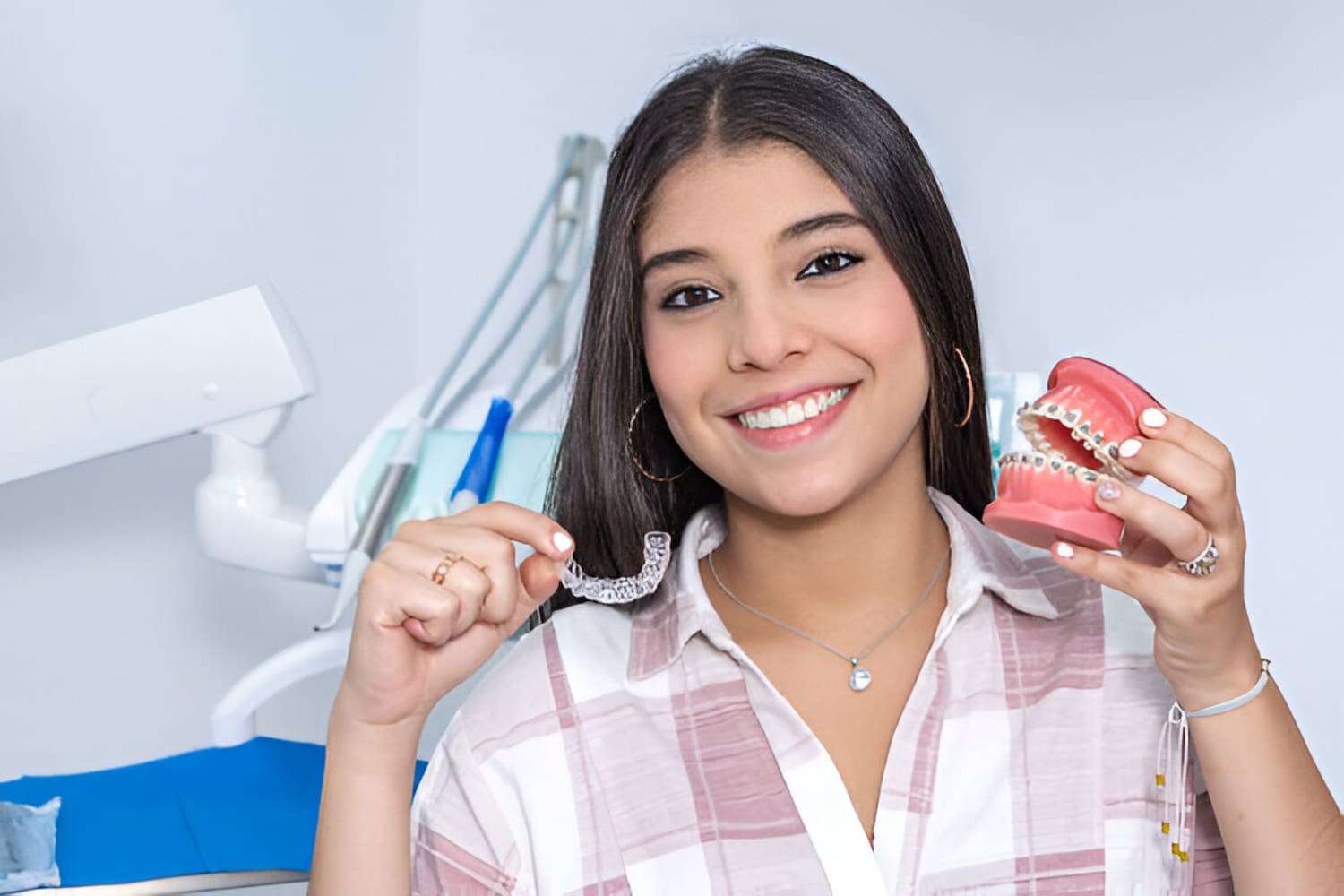
When it comes to straightening your teeth, two of the most popular treatment options are traditional braces and Invisalign® clear aligners. While both methods deliver beautiful, straight smiles, they do so in very different ways. Choosing the right option depends on your lifestyle, dental needs, and personal preferences.
The most obvious difference between Invisalign and braces is their appearance.
Braces use metal or ceramic brackets that are bonded to your teeth and connected by wires. Even with tooth-colored options, braces are still visible when you smile or speak.
Invisalign, on the other hand, uses clear, custom-made aligner trays that fit snugly over your teeth. They are nearly invisible, making them a discreet choice for teens and adults who want to straighten their teeth without drawing attention.
👉 If confidence in your smile during treatment is important, Invisalign has a major advantage.
Braces work by tightening wires and brackets, which can sometimes cause soreness, irritation, or mouth ulcers where the brackets rub against your cheeks or gums. Adjustments can also feel uncomfortable for a few days.
Invisalign aligners, however, are smooth and made of flexible plastic. While you may feel mild pressure each time you switch to a new set of trays, they generally cause less irritation than braces. There are no sharp wires or brackets, which makes them more comfortable for most patients.
One of the biggest benefits of Invisalign is that the aligners are removable.
With braces, sticky, hard, or chewy foods—like popcorn, gum, or crunchy snacks—are usually off-limits, since they can damage the brackets and wires.
Invisalign aligners are taken out when eating or drinking anything besides water. This means you can continue to enjoy all your favorite foods without restrictions.
That said, Invisalign requires discipline. You must wear your aligners 20–22 hours per day to stay on track.
Braces can make brushing and flossing tricky. Food often gets stuck around the brackets and wires, requiring special floss threaders or interdental brushes to keep your mouth clean. Poor hygiene can lead to cavities or staining around the brackets.
Invisalign aligners are much easier to maintain. Simply remove them before brushing and flossing, and clean the trays with water and a soft brush. Since nothing is attached to your teeth, keeping your smile healthy during treatment is far more convenient.
Both Invisalign and braces are effective at treating mild to complex cases, but treatment times may differ:
Braces are often recommended for complex orthodontic cases, such as significant bite problems or severe crowding. Treatment usually lasts 18–36 months.
Invisalign is ideal for mild to moderate cases, such as crooked teeth, gaps, or mild bite issues. Average treatment time ranges from 12–18 months, though some patients may finish sooner.
Your dentist or orthodontist will determine which option is best based on your unique needs.
With braces, you’ll need to visit your dentist or orthodontist regularly (every 4–6 weeks) for adjustments. These visits involve tightening wires, replacing bands, and making sure everything is moving properly.
Invisalign check-ins are usually quicker and less frequent. Your dentist provides multiple sets of aligners at once, and you simply switch to the next set at home every 1–2 weeks. Visits typically focus on tracking your progress rather than making manual adjustments.
In many cases, Invisalign and braces cost about the same, though prices vary depending on your location, provider, and treatment complexity. Braces may be slightly more affordable for complex cases, while Invisalign may cost more for mild cosmetic straightening.
The good news? Many dental offices, including Affinity Dental in Norwood, offer payment plans and financing options to make both treatments accessible.
Choosing between Invisalign and braces depends on:
Your lifestyle → If you want a discreet, flexible option, Invisalign is likely the best fit.
Your dental needs → If your case is severe, braces may be recommended for maximum precision.
Your discipline → Invisalign requires commitment to wearing the trays consistently. If you’re likely to forget, braces may be more reliable.
Both Invisalign and braces can transform your smile—but the journey looks different with each. Invisalign offers unmatched discretion, comfort, and flexibility, while braces remain a trusted solution for even the most complex orthodontic needs.
At Affinity Dental in Norwood, Massachusetts, Dr. Richard and Dr. Victor take the time to explain your options, answer your questions, and design a treatment plan that fits your smile goals and lifestyle. Whether you choose Invisalign or braces, our mission is simple: to give you a healthy, confident smile you’ll love for life.